


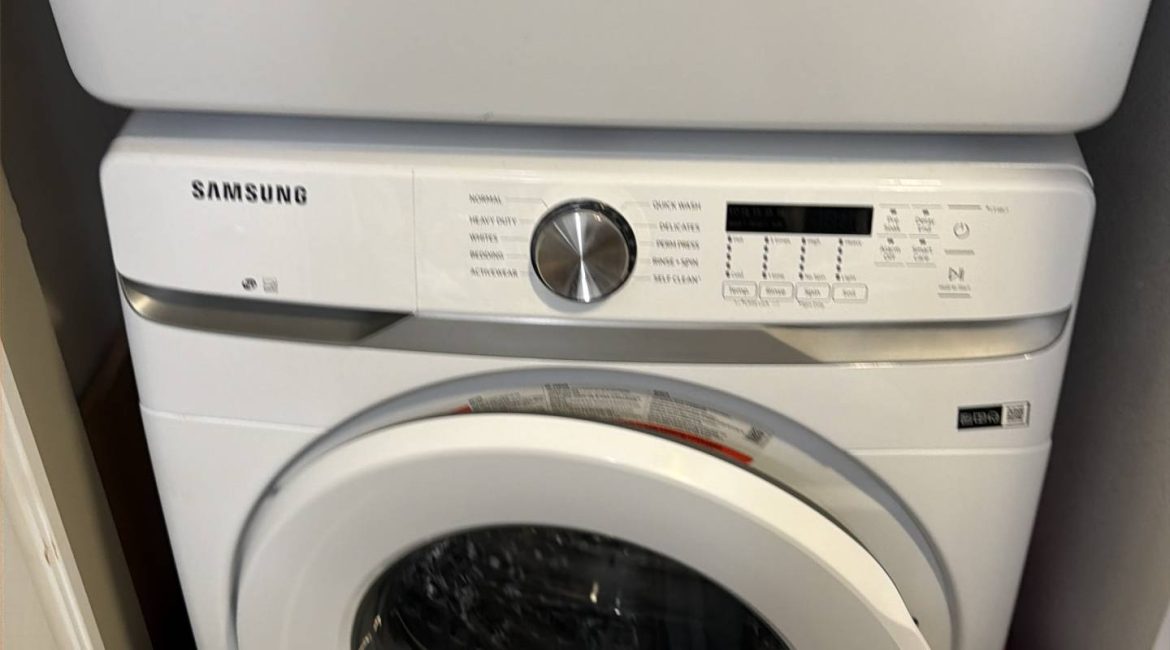
A washing machine that pauses briefly between the wash cycle and the spin cycle is operating normally. During this transition, the appliance drains water, balances the load, and prepares the drum for high-speed spinning. However, if the machine remains idle for several minutes—or even longer—before spinning begins, there may be an underlying problem affecting its performance.
Long pauses between wash and spin cycles can be frustrating because they increase laundry time and may leave clothes soaking wet. While some delays are built into modern washers, excessive waiting often points to issues involving the control board, motor system, sensors, or drainage components.
Understanding the possible causes can help determine whether the problem requires professional repair.
How the Transition from Wash to Spin Normally Works
At the end of the wash cycle, the washer must complete several tasks before spinning:
- Drain the wash water
- Verify that the water level is low enough
- Balance the load inside the drum
- Activate the motor for spin mode
- Reach the appropriate spin speed
Most machines perform these steps within a few minutes. If the washer pauses much longer than usual, one or more components may be struggling to complete the process.
Control Board Timing Problems
The control board acts as the washer’s central computer. It coordinates every stage of the cycle and sends commands to motors, valves, sensors, and pumps.
When the control board develops faults, it may:
- Delay spin activation
- Freeze temporarily between cycles
- Send incorrect signals to components
- Restart portions of the cycle
- Fail to recognize completed actions
In some cases, a damaged circuit or failing electronic component causes intermittent behavior. The machine may work normally during some loads but experience long pauses during others.
Because control boards contain complex electronics, accurate diagnosis usually requires professional testing.
Motor Control Issues
Many modern washing machines use sophisticated motor control systems that regulate drum movement during washing and spinning.
If the motor or motor control module encounters difficulties, the washer may hesitate before entering spin mode.
Possible symptoms include:
- Repeated attempts to start spinning
- Clicking sounds during the pause
- Drum movement that starts and stops
- Reduced spin speed
- Extended cycle times
A motor that struggles to accelerate properly may force the washer to delay the spin cycle while the control system repeatedly attempts to engage it.
Drainage Problems Can Cause Long Delays
Before spinning begins, the washer must remove water from the tub.
If draining takes longer than expected, the machine may appear to be paused when it is actually waiting for water levels to drop.
Potential causes include:
- Partially clogged drain hose
- Restricted pump filter
- Weak drain pump
- Kinked drain line
- Blockages in household plumbing
Even a minor drainage restriction can significantly increase the time required to transition into spin mode.
Water Level Sensor Malfunctions
The water level sensor monitors how much water remains inside the machine.
If the sensor provides inaccurate readings, the control board may believe that water is still present even after draining has completed.
This can result in:
- Long pauses before spinning
- Repeated drain attempts
- Interrupted cycles
- Error messages
- Failure to reach full spin speed
A faulty pressure switch or damaged pressure hose can create these symptoms.
Load Balancing Delays
Modern washing machines are designed to protect internal components from excessive vibration.
When the control system detects an unbalanced load, it may pause the cycle and attempt to redistribute clothing before spinning.
Common causes include:
- Washing a single heavy item
- Blankets or comforters bunching together
- Uneven clothing distribution
- Overloaded drums
- Underloaded drums
The washer may repeatedly tumble the load and pause before eventually proceeding to the spin cycle.
If balancing attempts continue for too long, the machine may appear stuck.
Door Lock Problems
For safety reasons, washers must verify that the door is securely locked before high-speed spinning begins.
A failing door lock assembly can cause delays because the control board repeatedly checks for confirmation that the door is secured.
Signs of door lock issues include:
- Clicking noises near the door
- Lock indicator flashing
- Cycle interruptions
- Failure to enter spin mode
- Random pauses
A worn lock mechanism or faulty lock sensor can create intermittent problems that are difficult to identify without testing.
Wiring and Connection Failures
Loose or damaged electrical connections can interfere with communication between components.
Affected areas may include:
- Motor wiring
- Control board connections
- Sensor harnesses
- Door lock circuits
- Power distribution connectors
Intermittent wiring faults often cause unpredictable symptoms, including occasional long pauses between cycle stages.
Because vibration occurs during every wash cycle, electrical connections can loosen over time.
Software and Electronic Glitches
Many newer washing machines rely on advanced software to manage cycles efficiently.
Occasionally, software errors or temporary electronic glitches can create delays.
A simple power reset may sometimes restore normal operation:
- Unplug the washer.
- Wait several minutes.
- Restore power.
- Run a test cycle.
If the issue returns repeatedly, a deeper electrical problem may exist.
When Professional Service Is Recommended
You should schedule service if:
- Pauses continue to grow longer
- The washer never enters spin mode
- Error codes appear
- The motor struggles to start
- Water remains in the drum
- The cycle takes significantly longer than normal
Because multiple systems work together during the wash-to-spin transition, identifying the exact cause often requires specialized diagnostic equipment.
Preventive Maintenance Tips
To reduce the risk of cycle delays:
- Clean pump filters regularly
- Avoid overloading the washer
- Distribute laundry evenly
- Inspect drain hoses periodically
- Use the correct detergent amount
- Address unusual noises promptly
Routine maintenance helps keep the washer operating efficiently and reduces strain on critical components.
Schedule Professional Washer Repair
If your washing machine pauses for an unusually long time between the wash and spin cycles, the problem may involve the control board, motor system, sensors, drainage components, or electrical connections. Prompt diagnosis can prevent further damage and restore normal performance.
The experienced technicians at Oceanside Appliance Service Center can accurately identify the source of the delay and provide reliable repairs for all major washing machine brands. Contact Oceanside Appliance Service Center today to schedule professional service and get your laundry routine back on track.
Contact us
