


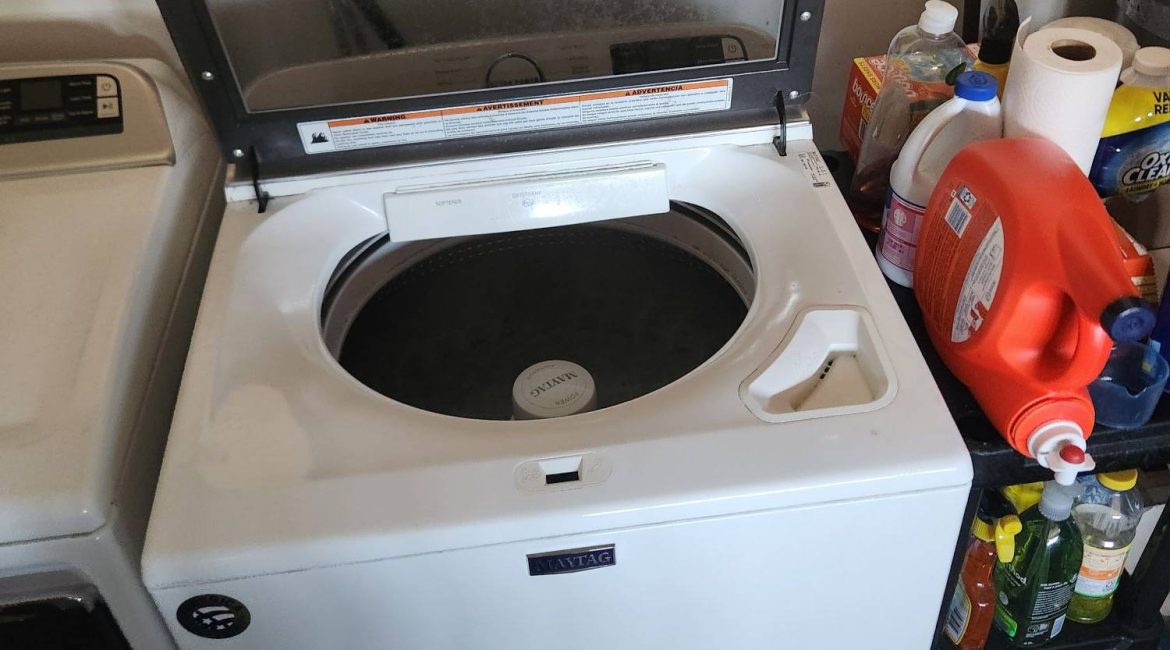
Small puddles under a washing machine after each cycle often look harmless at first. The appliance still runs, clothes still wash, and the leak may not even appear every time. This inconsistency is what makes the issue harder to track. Water can appear in different spots, at different times, depending on load size, cycle type, and how internal components behave under pressure.
Intermittent leaks usually indicate that water is escaping only during certain stages of operation. This typically happens when a seal weakens, a connection loosens, or a component starts failing under vibration or water pressure changes.
Door Seal Wear or Minor Damage
The door gasket is one of the most common sources of small leaks in front-loading machines. It is designed to create a tight barrier during the wash and spin cycles. Over time, rubber loses flexibility, develops micro-tears, or collects debris that prevents a proper seal.
Leaks from a door gasket are often inconsistent. Water may escape only during high-speed spin cycles or when the drum is heavily loaded and pressure shifts toward the front of the machine. Even small folds in the gasket can redirect water outward instead of keeping it inside the drum.
Detergent Drawer Overflow or Blockage
The detergent dispenser can cause leaks that appear random. When detergent buildup blocks water flow channels, water can back up and overflow during the fill stage. In some cases, water runs down the front panel and collects underneath the machine, giving the impression of a bottom leak.
This issue often becomes more noticeable when using liquid detergent in high amounts or when the drawer is not cleaned regularly. Residue buildup narrows the channels and forces water to escape outside the intended path.
Drain Hose Connection Problems
The drain hose carries water out of the machine after each cycle. If the connection at the back loosens slightly, leaks may appear only during draining, not during washing or filling. This makes the problem seem intermittent.
Vibration during spin cycles can shift the hose position just enough to allow water to escape. Even a small misalignment at the standpipe or pump connection can result in a slow drip that collects under the washer without obvious signs during operation.
Drain Pump or Filter Housing Issues
The drain pump works under pressure, especially during fast spin cycles. If the pump seal is worn or the filter housing is not tightened properly, water may leak only when the pump is actively pushing water out.
This type of leak is often difficult to detect because it happens briefly and under load. A partially clogged filter can also increase pressure inside the pump, forcing water through weak points in the housing.
Internal Hose or Clamp Wear
Inside the machine, multiple hoses transfer water between the drum, pump, and detergent system. These hoses are secured with clamps that can loosen over time due to vibration and repeated use.
A loose internal hose may not leak during every cycle stage. It might only release water when the machine shifts into high-speed spin or when internal pressure increases. This makes the leak appear random and inconsistent.
Overloading and Water Splashing
Overloading the drum can lead to uneven distribution of water and clothes. When the load is too heavy or unbalanced, water can splash toward the door seal or internal walls, eventually finding its way out.
In these cases, the machine itself may not be defective. The leak is caused by operating conditions that push water beyond normal containment areas, especially during aggressive spin cycles.
Why Intermittent Leaks Are Hard to Identify
The main challenge with small puddles is their irregular appearance. A leak may depend on cycle type, load size, water temperature, or even how the drum settles during spinning. This variability means the same machine can appear completely dry in one cycle and leak in another.
Small leaks often start gradually. A weak seal or loose connection may hold under light use but fail when pressure increases. Over time, these small escapes of water become more frequent and more noticeable.
How to Approach Diagnosis
Identifying the source requires checking the most common failure points in a structured way. This includes inspecting door seals for wear, cleaning the detergent drawer, tightening hose connections, and examining the drain pump area for residue or moisture.
If the leak cannot be reproduced consistently, professional diagnostics become important. Specialized testing can simulate different cycle stages and identify exactly when and where water escapes.
Professional Repair Matters
Ignoring intermittent leaks can lead to moisture buildup under flooring, corrosion of internal components, and long-term electrical risks. Even small amounts of water can damage nearby structures if the issue continues unnoticed.
A technician can isolate the cause more quickly by testing pressure points, inspecting internal hoses, and evaluating pump performance under load conditions.
Schedule Washer Repair Service
If your washing machine leaves small puddles after every cycle, the issue is likely developing in one of the key water control systems. Early inspection helps prevent larger failures and protects the appliance from further damage.
Oceanside Appliance Service Center provides professional washing machine diagnostics and repair. Contact the service center to schedule an inspection and restore reliable, leak-free operation.
Contact us
(442) 291-2244
