


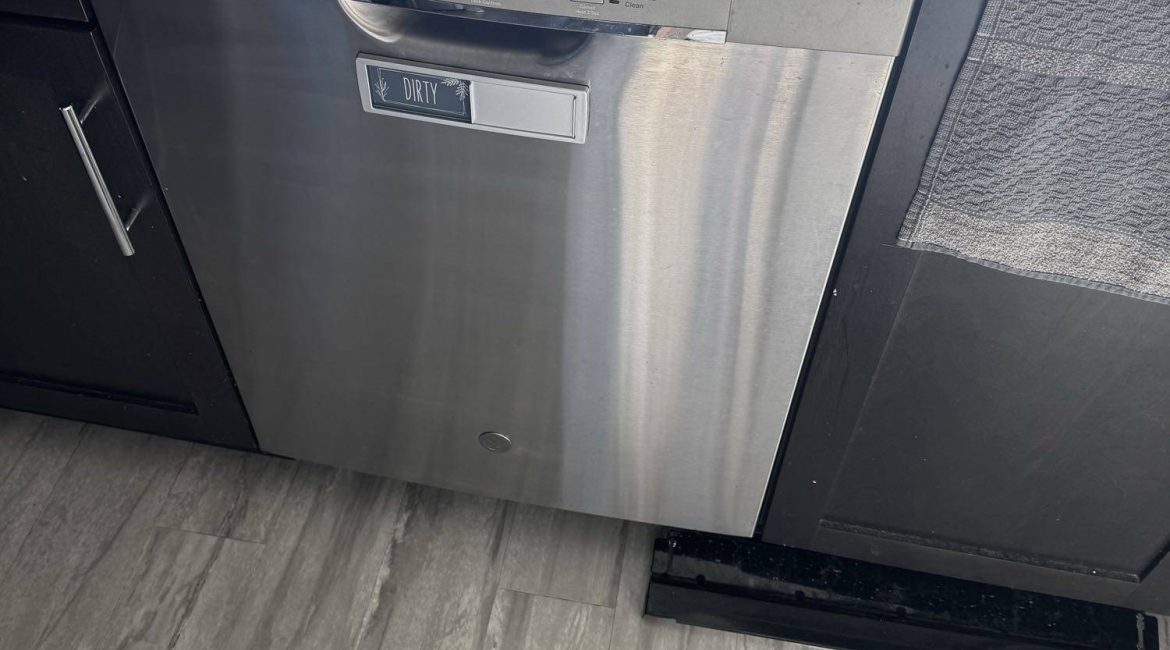
White film or cloudy spots left on dishes after a dishwasher cycle is a common issue that often signals two underlying problems: mineral buildup from hard water or improper drying due to heating system inefficiency. While the result looks cosmetic at first, over time it can indicate that the appliance is not working at full performance and may require attention.
Hard water and mineral deposits
One of the most frequent causes of white residue is hard water. Water with a high concentration of calcium and magnesium leaves mineral deposits when it evaporates during the drying cycle. These deposits appear as streaks, cloudy film, or chalk-like spots on glassware and plates.
This issue becomes more noticeable when:
- Rinse aid is not used or is running low
- The dishwasher operates in eco or low-temperature mode
- Water softening systems are not installed or not functioning properly
Hard water buildup does not usually damage dishes, but it affects appearance and gradually coats internal dishwasher components as well. Spray arms, filters, and heating elements can become less efficient over time if mineral buildup is not addressed.
Heating and drying system issues
The second major cause is related to the dishwasher’s drying process. Most modern dishwashers rely on a heating element or heat pump system to raise the internal temperature during the final stage of the cycle. If this system is not working correctly, moisture does not fully evaporate, leaving behind mineral-rich droplets that dry into visible residue.
Common heating-related problems include:
- Weak or failing heating element
- Faulty thermostat preventing proper temperature control
- Malfunctioning control board interrupting the drying cycle
- Poor ventilation inside the dishwasher tub
When dishes come out wet or only partially dry, residue becomes more visible after the water evaporates naturally. This often creates the impression of a cleaning problem, even though the issue is in the drying phase.
Detergent and rinse aid imbalance
Another factor that contributes to residue buildup is incorrect chemical balance. Using too much detergent or the wrong type for local water conditions can leave behind a film. Similarly, lack of rinse aid prevents water from sliding off dishes efficiently, causing droplets to dry in place and leave marks.
Signs of imbalance include:
- Cloudy glassware after every cycle
- Sticky or chalky texture on plates
- Inconsistent results depending on detergent brand
Adjusting dosage or switching products often improves results, but it does not resolve underlying heating or water quality issues.
Water temperature and cycle selection
Dishwashers are designed to work within a specific water temperature range. If incoming water is too cold, detergent does not dissolve fully, and grease is not removed effectively. This leads to residue that becomes more visible after drying.
Short or eco cycles can also contribute to the problem. These settings reduce energy use but often rely on lower temperatures and shorter drying times, which are not always sufficient for heavily soiled loads or hard water conditions.
How to identify the root cause
To narrow down the issue, it helps to observe patterns:
- Residue on glass only: likely hard water mineral deposits
- Wet dishes after cycle: likely drying system failure
- Mixed results depending on load: possible detergent or rinse aid issue
- Gradual worsening over time: internal scaling or heating degradation
A combination of these symptoms often points to more than one contributing factor.
Preventive steps
Several maintenance actions can reduce or eliminate white residue:
- Regular use of rinse aid
- Cleaning filters and spray arms monthly
- Running a dishwasher cleaning cycle with descaling solution
- Checking water hardness and adjusting detergent accordingly
- Avoiding consistently low-temperature cycles for heavy loads
If mineral buildup has already formed inside the appliance, a professional descaling service may be required to restore full performance.
When professional service is needed
If residue persists after adjusting detergent use, cleaning filters, and verifying cycle settings, the issue is likely internal. Heating elements, thermostats, and control systems require testing with proper diagnostic tools. Ignoring these problems can lead to increased energy consumption, longer cycles, and reduced appliance lifespan.
For accurate inspection and repair of dishwasher heating systems, water circulation, or scaling issues, professional service is the most reliable solution.
Oceanside Appliance Service Center
For persistent white residue problems, drying failures, or suspected hard water damage inside your dishwasher, contact Oceanside Appliance Service Center. Technicians can diagnose heating performance, check internal scaling, and restore proper cleaning and drying efficiency so your appliance works as intended again.
Contact us
