


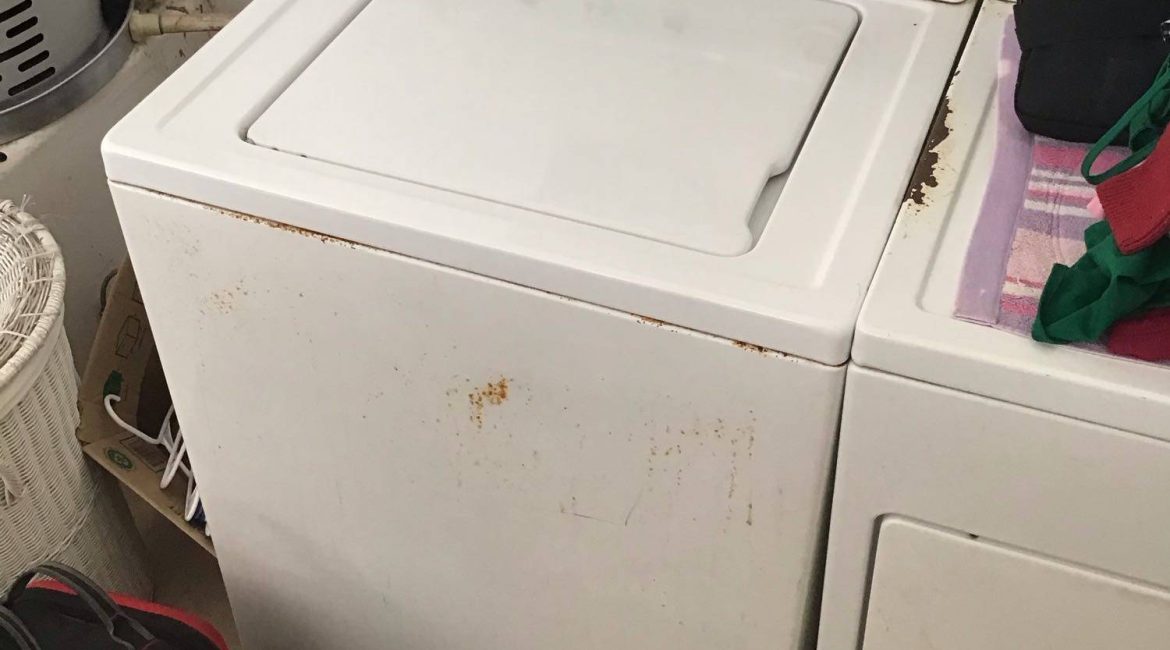
A GE washing machine that fills with water but won’t agitate clothes is dealing with a problem that can leave laundry dirty even when the rest of the cycle appears normal. The agitator is responsible for moving clothes through the water and detergent, helping loosen dirt, oils, and stains. When it stops moving, the washer may fill and drain correctly while failing to clean the load properly. Several components can cause this symptom, but the agitator and drive motor are among the most likely areas to inspect. Identifying the source early can prevent additional wear and help avoid a more expensive repair.
How the Agitator Works
Traditional top-load GE washers use an agitator positioned in the center of the wash basket. During the agitation portion of the cycle, the agitator moves back and forth or rotates in alternating directions. This movement circulates clothing through the water and creates the mechanical action needed for effective cleaning. If the washer fills normally but the agitator remains still, the problem may be mechanical or electrical. A damaged agitator, worn internal components, drive system failure, or motor problem can interrupt the washing action. Some GE models use an impeller rather than a traditional agitator, so the exact design depends on the washer model.
Worn or Damaged Agitator
The agitator itself can become damaged or worn over time. Plastic components may crack, while internal splines or other connection points can wear down. In some cases, the agitator may appear intact but fail to transfer movement from the drive system to the wash basket. A common symptom is an agitator that moves loosely by hand when the washer is turned off. You may also notice unusual clicking or slipping noises during the wash cycle. If the agitator is damaged, replacing only that component may restore normal operation. However, the technician should check the underlying drive connection before installing a new part. Otherwise, a replacement agitator could develop the same problem.
Drive Motor Problems
The drive motor provides the power needed for the washer’s mechanical movement. If the motor fails, the washer may fill with water but fail to agitate or spin correctly. Motor problems can have several causes. Electrical failure, worn components, overheating, or problems elsewhere in the drive system can prevent the motor from operating properly. Depending on the model, the washer may also display an error code or stop during the cycle. A faulty motor can sometimes produce a humming sound without generating enough movement. In other cases, there may be no motor sound at all. Because the motor is connected to other components, diagnosing it usually requires electrical and mechanical testing rather than simply replacing the motor based on the symptom.
Drive Belt and Other Mechanical Components
On GE washing machines equipped with a drive belt, a worn, stretched, or broken belt can prevent the agitator from moving correctly. The motor may run while the basket and agitator remain stationary. Other models use different drive configurations, including components such as pulleys, couplings, transmissions, or gear mechanisms. A failure in one of these parts can interrupt agitation even when the washer receives power normally. This is why the same symptom can have several different causes. A proper diagnosis should identify which component has actually failed before parts are replaced.
Why the Washer May Still Fill and Drain
It can be confusing when a GE washer fills with water and drains normally but does not agitate. These functions rely on different components. The water inlet system controls filling, while the drain pump removes water at the appropriate stage. Agitation depends on the drive system and its associated mechanical components. A failure in the agitation system therefore does not necessarily affect filling or draining. If clothes come out wet and visibly dirty even though the washer completes its cycle, the lack of agitation may be the reason.
Signs That Point to a Mechanical Problem
Pay attention to what happens immediately before and during the wash cycle. Certain symptoms can provide useful clues. If you hear a motor running but the agitator does not move, the problem may involve the agitator, belt, coupling, or another drive component. A loud clicking or grinding sound can indicate damaged mechanical parts. If the washer is completely silent during agitation, an electrical issue, motor failure, control problem, or wiring fault may need to be investigated. A washer that agitates weakly can also indicate a worn component rather than a complete failure. Continuing to operate the machine in this condition can place additional stress on the drive system.
What to Check Before Scheduling Repair
Before calling for service, make sure the washer is receiving power and that the selected cycle actually includes an agitation stage. Avoid opening or disassembling the washer unless you are comfortable working around electrical and moving components. Do not repeatedly restart the washer if you hear grinding, burning smells, or unusual mechanical noises. These symptoms can indicate a component that is overheating or failing. For an accurate diagnosis, a technician can inspect the agitator, drive motor, belt or coupling, wiring, control components, and other model-specific parts. Testing the washer under operating conditions helps determine why agitation has stopped.
Professional GE Washer Repair in Oceanside
A GE washing machine that won’t agitate clothes should be diagnosed before the problem becomes more extensive. The agitator may be worn, but the real cause could be the drive motor, belt, coupling, or another component in the drive system. If your washer fills and drains but leaves clothes dirty, contact Oceanside Appliance Service Center for professional appliance repair. A trained technician can inspect the washer, identify the failed component, and recommend the appropriate repair. Need GE washing machine repair in Oceanside? Contact Oceanside Appliance Service Center to schedule service and get your washer working properly again.
Contact us
