


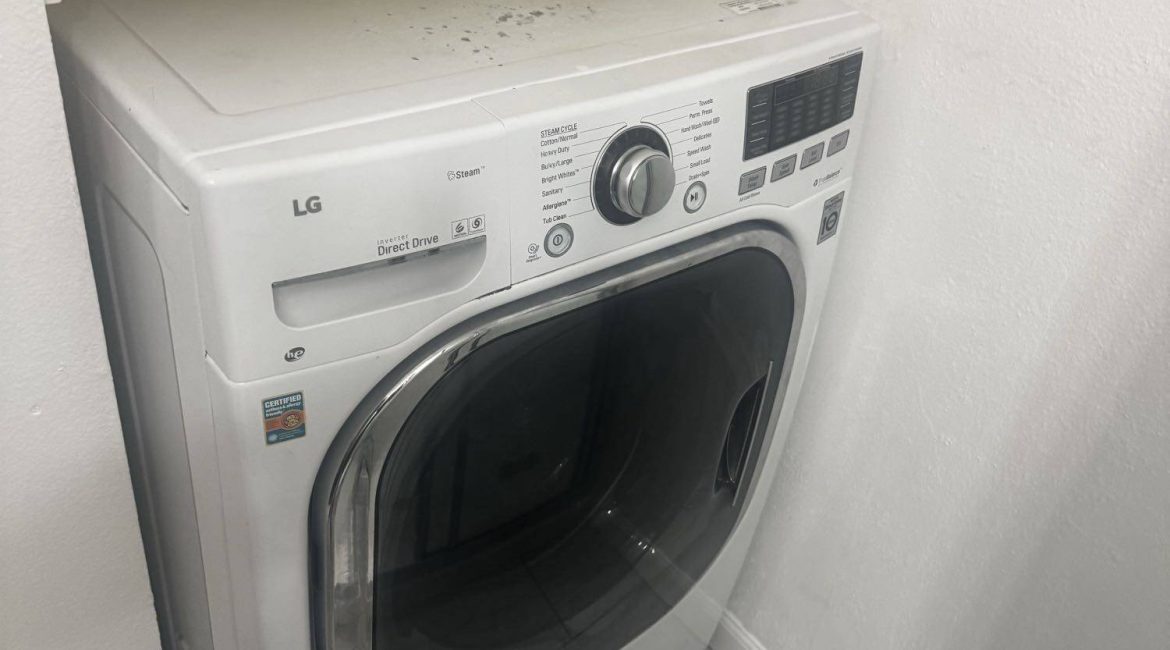
An LG washing machine that leaves water inside the drum after a cycle has finished is usually experiencing a drainage problem. You may notice that clothes are still sitting in water, the door remains locked, the washer takes much longer to complete a cycle, or the machine displays a drainage-related error. In some cases, the washer may drain slowly at first and then stop completely.
A washing machine relies on several components to remove used water. The drain hose carries water away from the appliance, the drain filter catches debris, and the drain pump forces water out of the tub. If one of these parts becomes blocked or fails, the washer may not drain completely.
One of the first things to consider is the drain filter. LG washing machines commonly have a pump filter designed to catch small objects that accidentally enter the drainage system. Coins, hairpins, buttons, lint, fabric pieces and other debris can collect inside the filter over time. When the filter becomes heavily clogged, water cannot pass through it efficiently.
A partially blocked filter can produce symptoms that are easy to overlook. The washer may still remove some water, but the process takes longer than normal. You might hear the drain pump running while water remains in the drum. Eventually, the machine may stop before the cycle is finished because it cannot reach the expected water level.
Another possible cause is a problem with the drain pump. The pump contains an impeller that moves water from the washing machine tub into the drain hose. If the impeller is damaged, obstructed or unable to operate correctly, the washer may leave a significant amount of water inside the drum.
A failed pump can sometimes be identified by listening during the drain portion of the cycle. You may hear a humming noise without seeing much water leave the machine. In other situations, the pump may remain completely silent. These symptoms can indicate different problems, so testing the pump and its electrical connections is important before replacing the component.
The drain hose should also be inspected. A kinked or crushed hose can restrict water flow even when the pump itself is functioning properly. A blockage inside the hose can create similar symptoms. If the washer has recently been moved, installed differently or pushed tightly against the wall, the position of the drain hose is worth checking.
The household drain connection can also contribute to incomplete draining. If the washer’s hose is connected to a clogged standpipe or drain, the appliance may pump water correctly but the water cannot leave the plumbing system fast enough. This can result in slow drainage, standing water or water returning toward the washer.
Another issue can occur when a small object reaches the pump area. A coin, piece of plastic, sock fragment or other item can interfere with the pump impeller. The pump may still make noise, but its ability to move water can be greatly reduced. Continuing to operate the washer under these conditions may put additional strain on the pump.
It is also possible for an electrical or control problem to affect drainage. The drain pump needs the correct electrical signal to operate during the appropriate part of the wash cycle. Wiring problems, damaged connections or a control issue can prevent the pump from receiving power. These faults require electrical testing rather than simply replacing the filter or pump.
Before troubleshooting, the washing machine should be disconnected from power. Water remaining in the drum can also spill when the filter or drainage components are opened, so towels and a suitable container may be necessary. If the filter is accessible and you are comfortable checking it, remove visible debris carefully and inspect the area around the pump.
However, cleaning the filter does not always solve the problem. If the washer continues to leave water in the drum, the drain pump, hose, wiring and household drain should be checked. Repeatedly running a machine that cannot drain properly can also create additional inconvenience and may leave laundry sitting in stagnant water.
A professional appliance technician can diagnose the drainage system systematically. The inspection can determine whether the problem is caused by a blocked filter, restricted hose, defective pump, electrical connection or another component. This approach helps avoid replacing parts that are still working correctly.
If your LG washing machine won’t drain completely, don’t ignore the problem. A washer that drains slowly today may stop draining altogether during a future cycle. Proper diagnosis can identify the source of the failure and determine which repair is actually required.
For professional LG washing machine troubleshooting and repair, contact Oceanside Appliance Service Center. Schedule a service visit to have the drainage system inspected and get your washer back to normal operation.
Contact us
