


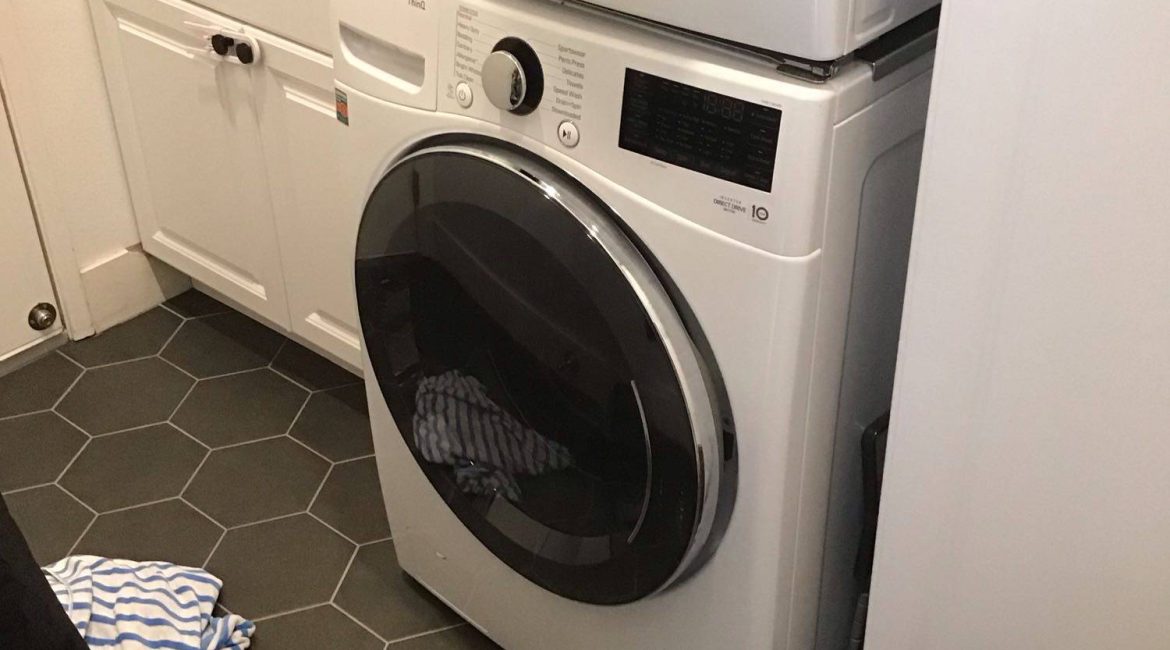
A Samsung front-load washing machine leaking from the door is a problem that should be addressed quickly. Even a small amount of water appearing near the front of the washer can indicate damage to the door boot, a worn door seal, an obstruction, or another problem affecting the door assembly. If the leak continues during every wash cycle, ignoring it can eventually lead to water damage around the appliance.
The door seal, also called a door boot or gasket, creates a watertight connection between the washing machine drum and the front door. It is designed to keep water inside the tub while the drum rotates. Because the seal is exposed to moisture, detergent residue, clothing, and repeated movement, it can eventually deteriorate.
Check the Door Seal for Visible Damage
The first component to inspect is the rubber gasket around the washer door. Look carefully for cracks, cuts, tears, worn areas, or sections that have become loose or deformed. A damaged gasket may allow water to escape during the wash or rinse cycle.
Small objects can also become trapped inside the folds of the seal. Coins, hairpins, buttons, pieces of plastic, and other debris may prevent the door from closing correctly or create a path for water to leak through.
If the gasket is visibly torn, cleaning it will not solve the problem. The damaged seal generally needs to be replaced.
A Dirty or Obstructed Gasket Can Cause Leaks
Detergent, fabric softener, lint, and dirt can accumulate inside the folds of the door boot. Over time, this buildup can interfere with the seal between the door and the gasket.
Regular cleaning helps reduce this type of problem. However, if the rubber has hardened, stretched, or lost its original shape, cleaning alone may not restore a proper seal.
When examining the gasket, make sure the entire circumference is seated correctly. A section that has pulled away from its mounting position can allow water to escape even when the rubber itself is not visibly damaged.
Inspect the Washer Door
The door itself can also contribute to a leak. If the door is not closing properly, the gasket may not make uniform contact with the glass. A loose hinge, damaged latch, misalignment, or worn door component can prevent the door from sealing correctly.
Check whether the door closes evenly and whether you notice unusual movement around the hinge. Do not force the door closed if it appears misaligned. Doing so can place additional stress on the gasket and door components.
An Overloaded Washer Can Increase Leakage
The way the washer is loaded can sometimes contribute to water escaping through the door. An overloaded drum can place excessive pressure on the door area and prevent clothes from moving properly during the cycle.
Large items such as blankets, towels, and heavy garments can also create an unbalanced load. If fabric becomes trapped between the door glass and gasket, water may find a path around the obstruction.
Using the recommended load size and distributing clothes evenly can help prevent unnecessary stress on the door assembly.
Check for Excessive Detergent and Suds
Using too much detergent can create excessive suds. When there is more foam than the washing machine is designed to handle, it can interfere with normal operation and contribute to water or suds escaping around the door.
Always use detergent appropriate for a high-efficiency front-load washer and follow the manufacturer’s dosage recommendations. If the machine repeatedly produces excessive suds even when the correct amount is used, professional diagnosis may be necessary.
The Door Seal May Not Be the Only Possible Cause
Water appearing near the door does not automatically mean that the gasket is defective. A leak from another component inside the washer can travel along the cabinet and eventually appear at the front of the appliance.
Problems with internal hoses, the detergent dispenser, drain components, or other water-carrying parts can produce similar symptoms. This is why replacing the gasket without identifying the actual source of the leak may not resolve the problem.
A technician can inspect the washer while considering when the leak occurs. For example, a leak that appears only while the machine fills may have a different cause from one that develops during high-speed spinning.
When Professional Repair Is Recommended
If the Samsung washing machine continues leaking after the door and gasket have been cleaned and checked, professional service is recommended. Continued operation can allow water to reach the floor, nearby cabinets, electrical components, or other parts of the appliance.
A technician can inspect the door boot, gasket mounting, hinge, latch, hoses, dispenser system, and other relevant components. If the seal is damaged, it can be replaced with the correct part for the washer model. If the leak originates elsewhere, the technician can identify the faulty component before carrying out the repair.
Avoid using the washer if water is leaking heavily or reaching electrical connections. Turn off the appliance and water supply when necessary, and arrange for a professional inspection.
Call Oceanside Appliance Service Center
A Samsung washer leaking from the door should not be ignored, even when the amount of water seems small. A damaged door boot or seal can worsen with continued use, while leaks from other internal components may cause additional damage.
For professional diagnosis and repair, contact Oceanside Appliance Service Center. Their technicians can inspect your Samsung washing machine, determine the source of the leak, and recommend the appropriate repair.
Call Oceanside Appliance Service Center at (442) 291-2244 or email [email protected] to schedule appliance repair service.
