


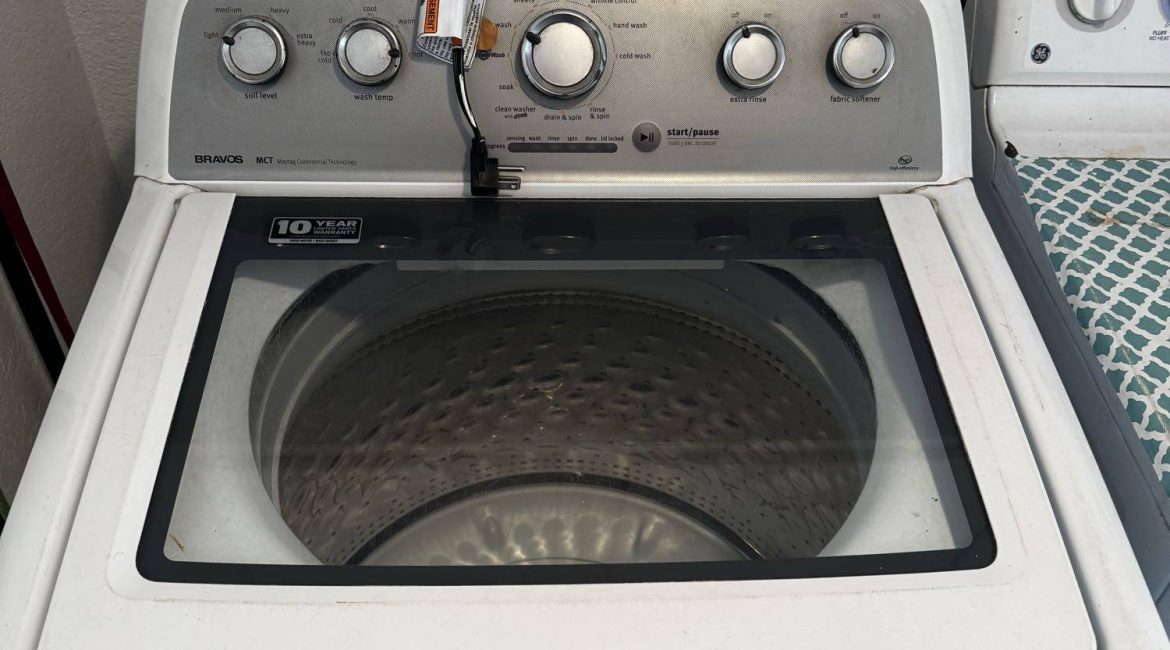
A washing machine that stays perfectly still during a delicate cycle but attempts to “walk” across the laundry room during a heavy-duty spin is more than just a nuisance; it is a diagnostic puzzle. When vibration is inconsistent—appearing only on certain programs—the issue rarely lies with the floor or the leveling legs. Instead, the focus shifts to the complex relationship between load dynamics and the machine’s internal imbalance detection systems.
The Mechanics of Balance
Modern washing machines are engineered to handle high-speed centrifugal forces. To prevent the appliance from tearing itself apart, manufacturers install sensors—typically 3D accelerometers or hall-effect sensors—that monitor the tub’s movement. When you select a cycle, the Control Module expects certain parameters. A “Cotton” cycle, for instance, anticipates a heavy, water-retentive load and is programmed to reach maximum RPM. A “Hand Wash” or “Delicate” cycle, however, operates at lower speeds where minor imbalances are negligible.
Excessive vibration that is program-specific often indicates that the machine is struggling to distribute the weight of specific fabric types before the high-speed spin phase begins.
Why Certain Programs Trigger Shaking
The root of the problem usually stems from how different cycles manage the “distribution phase.” This is the period before the spin where the drum rotates slowly back and forth to spread the laundry evenly against the drum walls.
- The Heavy Bedding Paradox: On a “Bedding” or “Bulky” cycle, the machine is prepared for heavy items. However, if you use a “Normal” cycle for a single heavy duvet, the software may not be calibrated to handle the specific “clumping” that occurs. The imbalance detection system might attempt to correct it, fail, and then proceed into a spin cycle that the mechanical suspension cannot support.
- Small Load Errors: Paradoxically, “Quick Wash” or “Small Load” programs are frequent offenders. If the drum is too empty—containing perhaps one pair of jeans and a few shirts—the machine cannot physically distribute the weight. The jeans represent a single heavy mass that clings to one side of the drum. On a standard program, the machine might keep trying to balance the load indefinitely, but on time-sensitive programs, it may skip certain checks, leading to violent shaking.
- The High-RPM Threshold: Some cycles are designed to hit 1200 or 1400 RPM. Vibration is exponential; an imbalance that is invisible at 600 RPM becomes a structural threat at 1200 RPM. If the vibration only occurs on high-speed programs, the issue likely points to weakened shock absorbers that can no longer dampen the specific frequency of high-speed rotation.
The Role of Imbalance Detection Sensors
When a machine vibrates excessively on specific cycles, the Imbalance Detection System (IDS) is often the silent culprit. The IDS is designed to detect if the drum is “out of round” during its rotation. If the sensors are faulty or overly sensitive, they may provide incorrect data to the control board.
In some cases, the software itself may be the issue. Modern appliances often require firmware updates to recalibrate how the IDS interprets “acceptable” movement. If the sensor detects a slight deviation on a high-speed cycle, it should theoretically slow the drum down. If it fails to do so, the mechanical components—the springs and shock absorbers—take the brunt of the force, leading to the “walking” effect.
Mechanical Wear and Program Specificity
While the sensors manage the software side, the physical hardware must execute the dampening.
- Shock Absorbers: These are responsible for absorbing the energy of the tub. Like those in a car, they wear out over time. They might still function for a light “Silk” load, but when a “Towels” program adds 20 pounds of water-weight, the absorbers bottom out.
- Suspension Springs: These hold the tub from above. If one spring has stretched more than the others, the tub sits at a slight angle. This angle might be irrelevant during low-speed cycles but creates a localized “thumping” during the aggressive spin of a “Whites” cycle.
A washing machine that vibrates selectively is sending a specific message: it is losing the battle against physics on high-stress programs. Ignoring this issue leads to “secondary damage,” including cracked outer tubs, worn motor bearings, and damaged flooring. Whether the fix requires a sensor recalibration, a set of new shock absorbers, or a software reset, professional intervention is necessary to ensure the appliance remains safe and functional.
If your appliance is exhibiting these symptoms, do not wait for a total mechanical failure. Contact Oceanside Appliance Service Center today to schedule a professional diagnostic. Our expert technicians specialize in identifying complex balance issues and restoring your machine to its quiet, stable operation.
Contact us
