

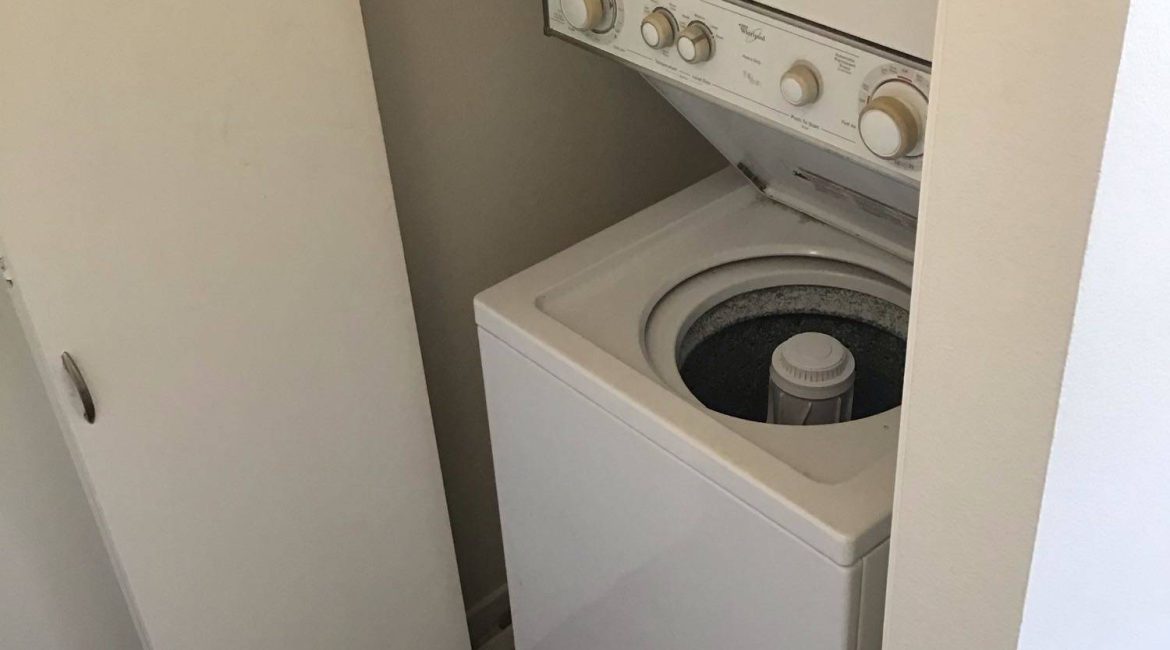
When a Kenmore washing machine starts the spin cycle but never finishes it, clothes may remain soaked and there may be standing water inside the drum. Sometimes the washer repeatedly attempts to spin, stops, and tries again. In other cases, the cycle may end with the drum moving slowly instead of reaching its normal high-speed spin.
Several problems can cause this behavior. Drainage restrictions are among the first things to investigate because a washer may refuse to enter or complete a high-speed spin when it cannot remove water properly. However, if the drainage system is working correctly, the motor control system, drive components, lid switch, or load balance may be responsible.
A partially clogged drain hose can slow water removal enough to interfere with the spin cycle. Small clothing items, lint, debris, or accumulated detergent residue can restrict the hose. A kinked drain hose can create a similar problem. If water remains in the tub after the washer attempts to drain, the hose should be inspected before assuming that an electronic component has failed.
The drain pump is another important component. Its job is to remove water from the washer before and during the spin process. A damaged pump motor, worn impeller, or internal obstruction can reduce pumping performance. You may hear the pump running without seeing much water leave the machine. In some cases, the pump may make unusual humming, rattling, or grinding sounds.
The washer’s motor control system can also prevent the spin cycle from completing. Modern Kenmore washing machines use electronic controls to regulate motor speed and coordinate different stages of the wash program. If the motor control board is malfunctioning, the washer may start spinning and then stop unexpectedly. It may also struggle to change from a low-speed movement to the faster speed required for extraction.
A motor problem can produce similar symptoms. The drive motor needs to generate enough torque to accelerate the drum, especially when the load contains wet clothing. A failing motor may operate intermittently or become too hot during operation. If the washer stops after several attempts to reach the correct speed, a professional technician may need to test the motor and its electrical connections.
The drive system should also be checked. Depending on the Kenmore model, the washer may use a belt, pulley system, direct-drive arrangement, or other mechanical components to transfer motor power to the drum. A worn belt can slip during high-speed operation, while damaged pulleys or other drive components can prevent the drum from maintaining the required speed.
An unbalanced load is a simpler possibility. A large blanket, several towels, or another heavy item can collect on one side of the drum. The washer may detect the imbalance and repeatedly attempt to redistribute the load instead of completing the spin. If the machine spins normally with a smaller, evenly distributed load, the issue may be related to load balance rather than a mechanical failure.
The lid or door safety system can also affect spinning. The washer needs confirmation that the lid or door is properly closed before allowing certain parts of the cycle to operate. A defective lid switch, door lock, or related wiring can cause the washer to stop before or during spin. This is particularly relevant when the washer appears to work normally during washing but repeatedly interrupts the spin cycle.
Another possibility is a problem with the water-level sensing system. The washer uses information from its pressure or water-level sensor to determine whether the tub has drained sufficiently. If the sensor or its pressure hose is obstructed or malfunctioning, the control system may receive incorrect information and prevent the machine from completing the cycle.
Before scheduling service, you can perform a few basic checks. Make sure the drain hose is not kinked and check whether water remains inside the tub after the cycle stops. Remove and redistribute the clothing if the load appears heavily concentrated on one side. You can also run an appropriate spin or drain cycle with the washer empty to determine whether the problem occurs without a laundry load.
Avoid repeatedly restarting the machine if it consistently stops during spin. Continued operation with a failing drain pump, motor, control component, or drive system can place additional strain on other parts. Electrical components should also be tested by a qualified technician rather than replaced based only on the symptom.
A professional diagnosis can determine whether the problem is caused by restricted drainage, a defective drain pump, motor control issues, a failing motor, drive-system wear, a safety switch, or another component. Because Kenmore washing machines vary by model, accurate troubleshooting should take the specific washer design and error codes into account.
If your Kenmore washing machine will not complete the spin cycle, contact Oceanside Appliance Service Center for professional appliance repair. Our technicians can inspect the washer, identify the source of the problem, and recommend the appropriate repair. Call (442) 291-2244 or email [email protected] to schedule service.
