

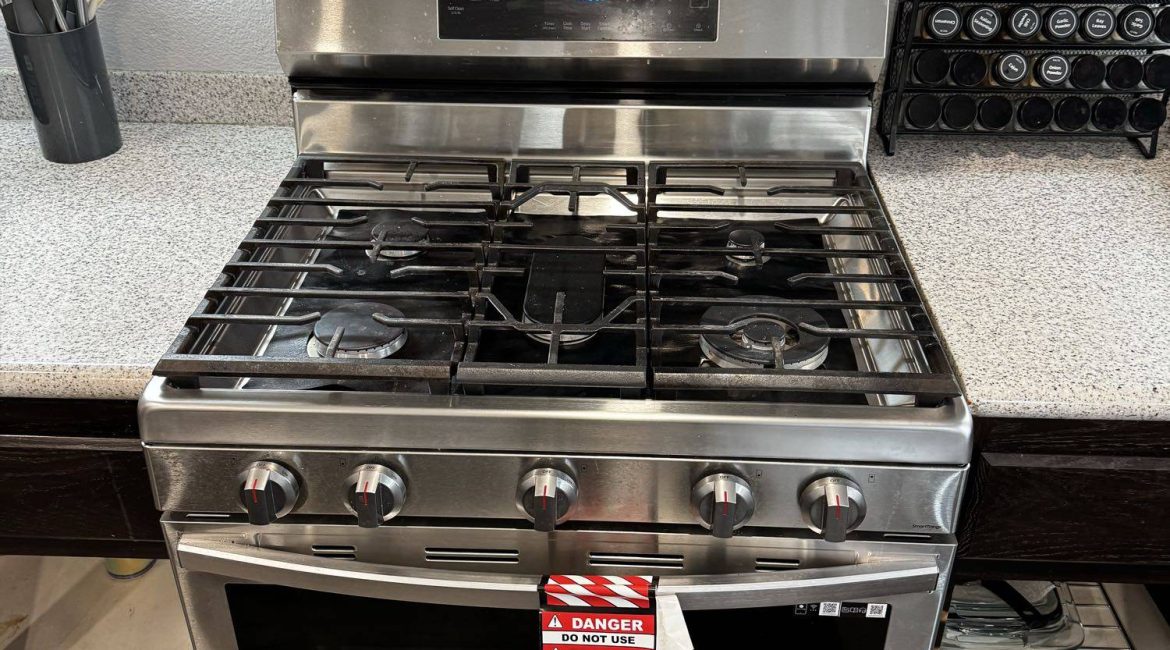
A gas burner is designed to produce a steady, evenly distributed flame that spreads heat across the bottom of a pan. When the flame starts behaving unevenly after ignition, it usually signals that the combustion process is being disrupted somewhere between the gas supply line and the burner ports. This kind of issue affects cooking performance, but more importantly, it can point to conditions that impact safety and long-term appliance reliability.
Uneven heating often appears as one side of the flame burning stronger, patches of weak flame, or a burner that seems to pulse instead of maintaining a consistent ring. In some cases, the flame may also shift color, become noisy, or lift slightly away from the burner surface.
How gas flow issues start inside the burner system
Gas stoves rely on a precise balance between fuel and air. Gas flows through the supply line, passes the control valve, mixes with air in the venturi, and exits through small burner ports. If any part of this path is disrupted, combustion becomes inconsistent.
One of the most common causes is partial blockage in the burner ports. Grease, food residue, or cleaning liquid can clog some of the tiny openings while leaving others clear. As a result, gas exits unevenly, creating irregular flame distribution.
Another frequent factor is misalignment. If the burner cap is not seated correctly, gas cannot spread evenly across the designed channels. Instead of a uniform ring, the flame concentrates in certain areas, producing hot and cold zones across the cookware.
When gas pressure becomes part of the problem
Uneven heating can also point to fluctuations in gas pressure. If the regulator is malfunctioning or the supply line is partially restricted, the burner may receive inconsistent flow. This often shows up as a flame that changes intensity during operation without any adjustment to the control knob.
Low pressure typically leads to weak, unstable flames. Excessively high pressure, on the other hand, can cause the flame to lift or separate from the burner surface. Both situations disrupt even heat distribution and can place extra stress on the burner components.
In multi-burner setups, comparing performance can help identify whether the issue is isolated or systemic. If all burners behave similarly, the problem is more likely tied to supply pressure rather than a single burner fault.
Air mixture imbalance and combustion quality
A gas flame depends on the right ratio of air to fuel. If too little air mixes with gas, the flame may turn yellow and burn unevenly. If too much air enters the system, the flame can become thin and unstable.
Dust buildup in air shutters or venturi tubes can alter this balance. Moisture after cleaning can also temporarily affect airflow, especially if it remains trapped near the burner base.
When combustion is incomplete, heat output becomes inconsistent. This not only reduces cooking efficiency but can also increase the risk of carbon monoxide production in poorly ventilated spaces.
Safety signals that should not be ignored
Uneven burner performance is not only a convenience issue. It can indicate conditions that require attention before continued use.
A stable blue flame usually signals efficient combustion. When the flame becomes patchy, yellow, or noisy, it suggests that the gas is not burning properly. Incomplete combustion can lead to soot buildup on cookware and, in enclosed environments, may affect indoor air quality.
Another warning sign is persistent ignition difficulty combined with uneven flame spread. This often indicates that gas is not reaching all burner ports consistently or that internal components are partially obstructed.
If the burner continues to behave unpredictably after basic cleaning and inspection, it is safer to avoid prolonged use until the cause is identified.
Practical steps for basic inspection
Some issues can be addressed without specialized tools. A careful cleaning of the burner cap and ports is often the first step. Removing debris from clogged openings using a soft brush or needle can restore even gas flow.
It is also important to check that the burner cap sits flat and centered. Even a slight tilt can redirect flame distribution. After reassembly, the burner should ignite with a uniform ring of flame within a few seconds.
If the problem persists, inspecting the gas hose connection for kinks or visible wear can help rule out external restrictions. However, internal regulator or valve issues require professional assessment.
When professional service becomes necessary
If uneven heating continues after cleaning and basic checks, the issue may involve internal gas regulation, faulty valves, or deeper airflow obstruction. These components require calibrated testing tools and technical expertise to diagnose safely.
Attempting to repair gas flow systems without proper training can create additional risks, including leaks or improper combustion settings. At that point, professional inspection is the most reliable way to restore safe operation.
A burner that heats unevenly is usually signaling a disruption in gas flow, air balance, or component alignment. While some causes are simple and maintenance-related, others point to deeper mechanical or regulatory issues. Paying attention to early signs helps prevent performance decline and reduces potential safety risks.
For inspection, repair, and full diagnostic service, contact Oceanside Appliance Service Center. Skilled technicians can identify the source of uneven heating and restore stable burner performance with proper calibration and safety checks.
Contact us
